







Resistivity, Thermal Resistance and Temperature Coefficient

Resistivity, Thermal Resistance and Temperature Coefficient
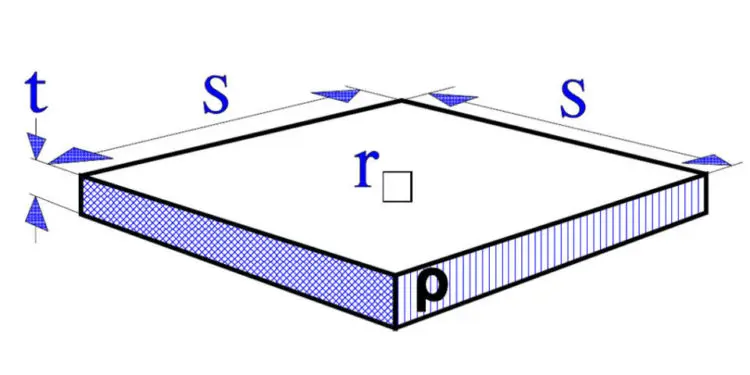
R1.1 RESISTIVITY (ρ) The resistivity, ρ, is a material constant. The higher the resistivity in the resistor material, the higher its resistance. The connection can be described as .............................. HereR = resistancel = conductor lengthA = conductor area. Depending on what units we express l and A in we get different units of ρ. A common way is by expressing l in m(eter) and...
Derating and Category Concepts

Derating and Category Concepts

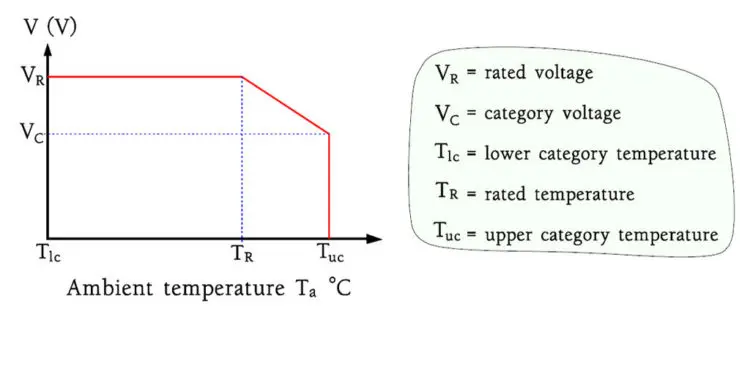
C1.6  CATEGORY CONCEPTS AND DERATING Recommendation for voltage derating means that the actual capacitor shall be used in the application at lower voltage than rated voltage. Derating is expressed usually by percentage of rated voltage that shall be subtracted. For example 20% derating means that the capacitor shall be used at 80% of rated voltage at the specific applications (10V capacitor to be used...

Ripple Current and Power Load

Ripple Current and Power Load

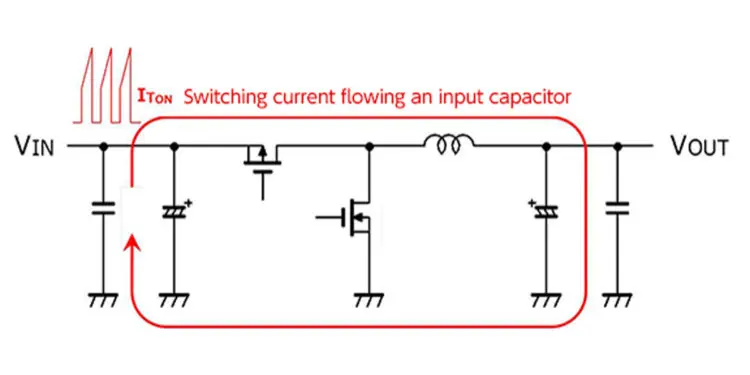
C 1.5. Ripple Current and Power Load Capacitors are naturally limited by its capability to handle/dissipate ripple current and pulse energy load. The limitation may be significantly different by each capacitor technology but also within a specific product type individual series. In general, the impact of inrush and ripple current can be divided to three time zones: high current immediate surge spiketransient load dI/dt...

Energy Content and Electromagnetic Force

Energy Content and Electromagnetic Force

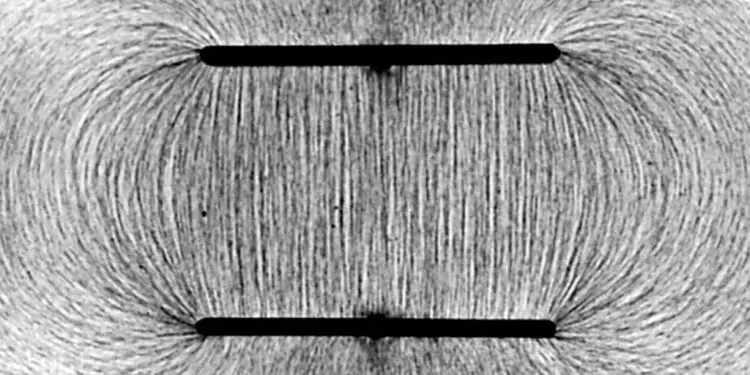
C1.4 ENERGY CONTENTS / FORCE MANIFESTATIONS C 1.4.1 Energy contents The energy stored in a capacitor can be described as …………… C 1.4.2 Force action from electromagnetic fields Parallel current carrying conductors are surrounded by magnetic fields exerting forces on each other. If currents flow in the same direction the fields (and the conductors) attract each other. If the current flows in opposite directions...

Core Materials and Their Losses

Core Materials and Their Losses

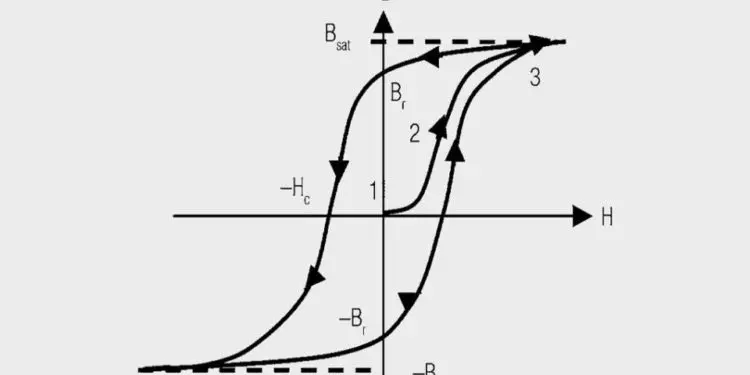
L.1.5 Core materials and their losses Introducing solids into a magnetic field, their behaviour can be classified in three groups: diamagnetic materials paramagnetic materials ferromagnetic materials Diamagnetic and paramagnetic materials have a relative permeability close to one. They are therefore only of limited suitability in the construction of inductive components. Ferromagnetic materials have a relative permeability between 10 and 100 000. In order to...

Page 419 of 427 1 418 419 420 427